
Local fir production since the mid-20th century
Traditionally part of Protestant culture (Alsace, Germany, Scandinavia, etc.), the Christmas tree custom took root in France in the middle of the 20th century, particularly in Paris. The Morvan region had commercial links with the capital thanks to river transport, and Morvan foresters took advantage of this new market. Today, Morvan is France's leading fir-growing region.
.A territory and know-how adapted to the production of high-quality fir trees
The geographical area covers the Morvan granite massif, whose soil and climate conditions contribute to the quality of the fir trees. The area's poor soils induce slow tree growth, contributing to fine branch density. The Morvan's cold, harsh climate means that trees go dormant early, making them more resistant to felling.


The natural qualities of the "Sapin de Noël du Morvan" are enhanced by the almost century-old know-how of Morvan producers. It is characterized in particular by pruning techniques throughout the life of the trees, or by individual selection of the fir trees. In addition, the growers have developed particular expertise in the production of large fir trees, the Christmas tree that takes pride of place every year in the courtyard of the Élysée Palace being a perfect example.
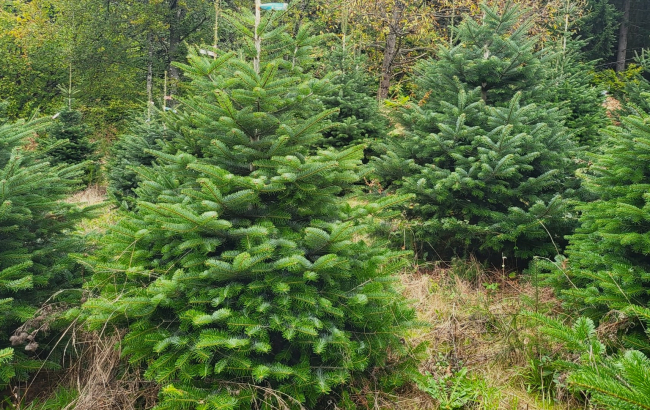
The "Sapin de Noël du Morvan" is presented cut or potted and comes from three species: Nordmann fir, Spruce and Noble fir. Dimensions range from 40cm to 15m in height. It meets precise aesthetic requirements and provisions such as a minimum cutting date ensuring that consumers have a quality product.
Environmentally-friendly practices
The PGI specifications are distinguished by a number of provisions in favor of environmental preservation:
- Obligation of environmental certification
- Fertilization on the basis of a soil analysis and a manuring plan
- Prohibition of synthetic mineral fertilizers
- Prohibition of chemical treatments on headlands and treads
- Late mowing

Economic data
17
producteurs (4 en cours d’habilitation)
800 000
Sapins par an (potentiel de production estimé)
About the Protected Geographical Indication (PGI)
PGI is linked to know-how. It identifies an agricultural product, raw or processed, whose quality, reputation or other characteristics are linked to its geographical origin. At least one stage in the production, processing or elaboration of this product must take place in the delimited geographical area. The PGI guarantees protection for the product at both national and European level. Compliance with PGI specifications is regularly monitored by independent bodies accredited and supervised by the State.
The latest approvals for French SIQO products
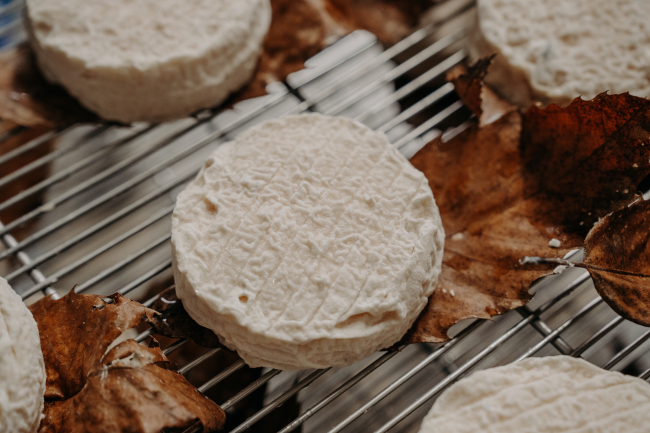
“Mothais sur feuille,” a soft cheese made from whole, raw goat’s milk, has been officially recognized as a Protected...
News
News
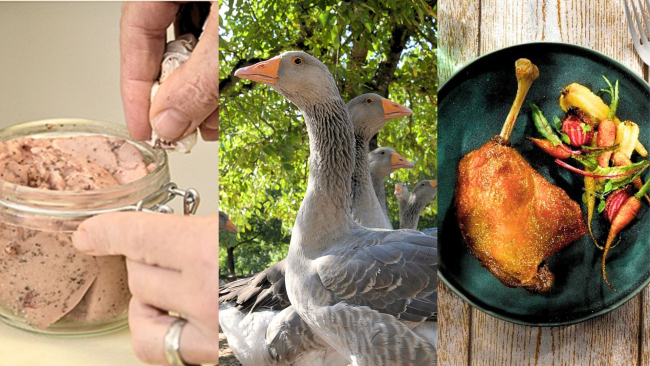
The designations “Oie du Sud-Ouest,” “Confit d’oie du Sud-Ouest ,” and “Southwest Goose Foie Gras” are now officially...
News
News
The "Morvan Christmas Fir" denomination is officially recognized as a Protected Geographical Indication (PGI), with the...
News
News